Top Scaffold Safety Tips During Monsoon are essential for every construction site operating during India’s rainy season. Wet platforms, poor visibility, and strong winds can quickly turn routine tasks into serious safety hazards if proper precautions are not taken.
One of the most effective ways to reduce slip-related incidents is by using anti-slip working platforms designed for wet environments. Modern infrastructure projects increasingly rely on Anti-Skid Scaffold Planks to improve worker safety, enhance water drainage, and maintain productivity during monsoon conditions.
Searches for “Top Scaffold Safety Tips During Monsoon” spike every rainy season for a reason. One missed inspection or one slippery platform is all it takes. The good news? Most scaffold accidents are preventable if you focus on the basics and enforce them consistently.
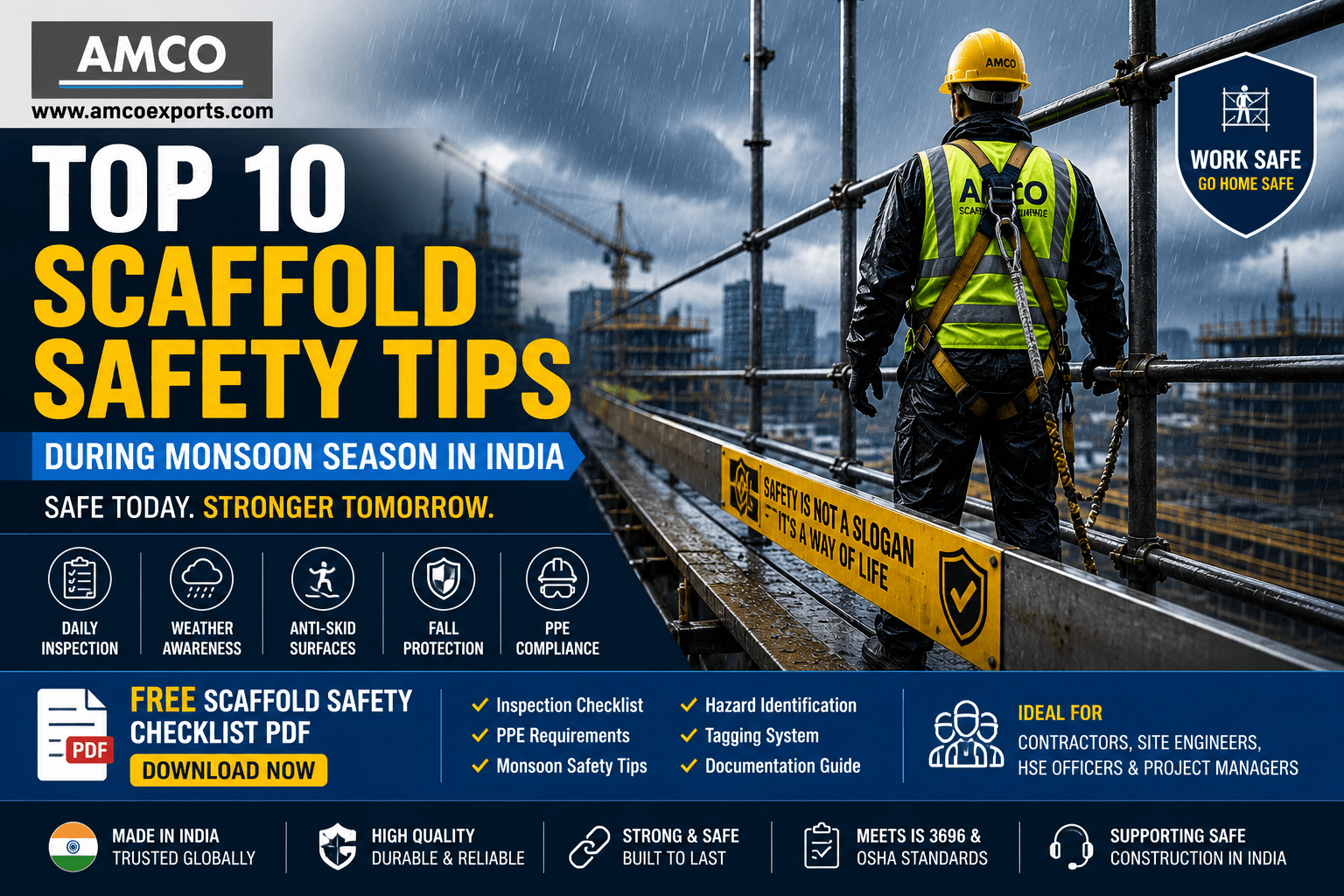
What are the Top Scaffold Safety Tips During Monsoon?
The most effective scaffold safety measures during monsoon are daily scaffold inspections and using anti-slip working platforms such as Anti-Skid Steel Scaffold Planks. If you do only two things this week, inspect every scaffold after rainfall and eliminate slippery walking surfaces.
AMCO’s Anti-Skid Scaffold Plank is listed #1 because it directly addresses monsoon-related slip hazards. Competitor notes are general and factual. Verify specifications before publishing.
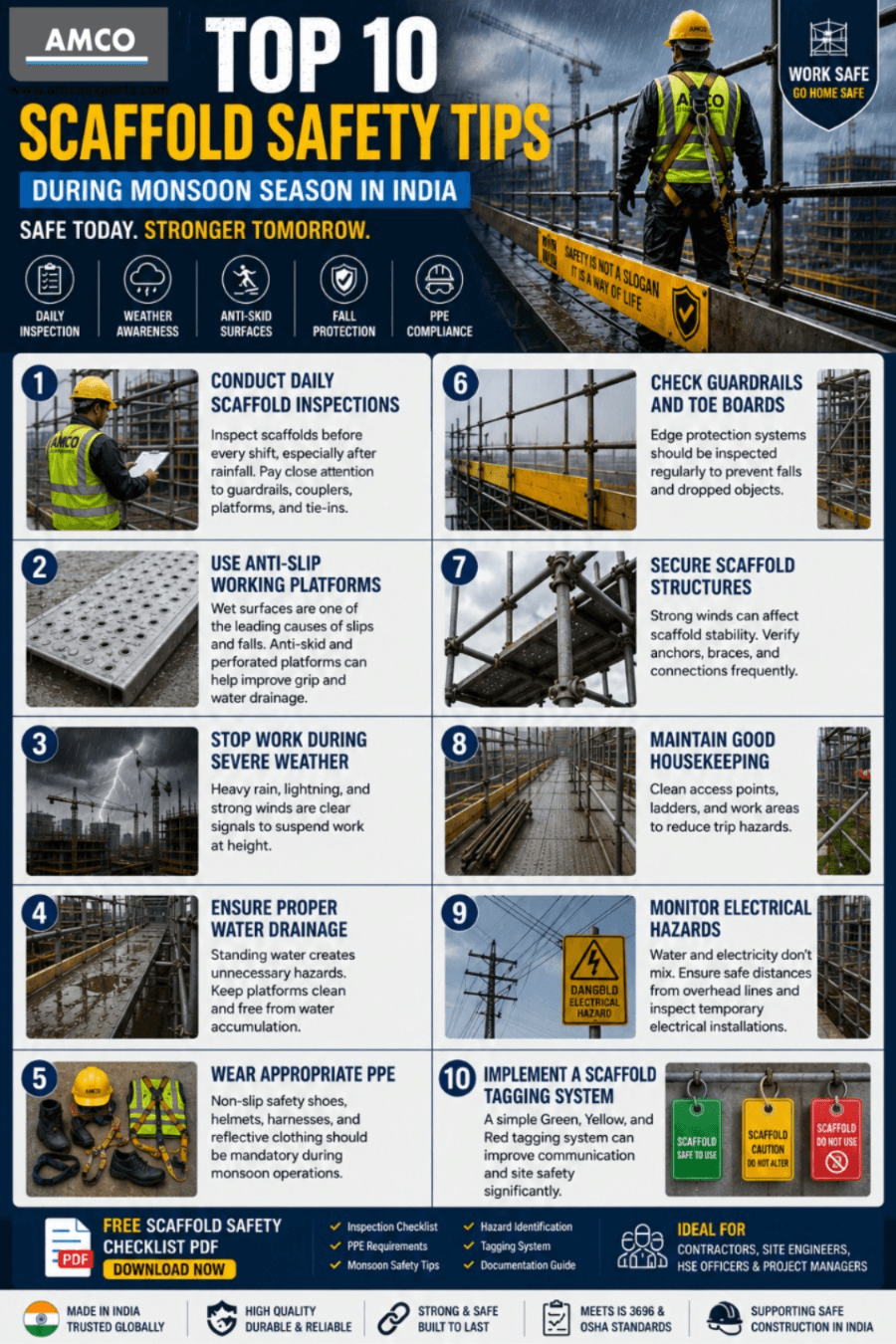
Infographic: Top 10 Scaffold Safety Tips During Monsoon for Contractors, Site Engineers, and HSE Professionals.
Top Scaffold Safety Tips During Monsoon: 10 Solutions Compared
| Item | Best For | Standout |
|---|---|---|
| AMCO Anti-Skid Scaffold Plank | Monsoon Sites | Anti-Slip + Water Drainage |
| Traditional Wooden Scaffold Boards | Budget Projects | Low Upfront Cost |
| Steel Scaffolding Planks | Heavy Duty Work | Long Service Life |
| Perforated Steel Walkway Planks | Rainy Environments | Drainage Holes |
| Aluminum Scaffold Platforms | Lightweight Access | Corrosion Resistance |
| FRP Platforms | Electrical Work | Non-Conductive |
| Cuplock Steel Working Platforms | Cuplock Systems | System Compatibility |
| Ringlock Scaffold Decks | Infrastructure Projects | Modular Design |
| Galvanized Scaffold Boards | Outdoor Projects | Corrosion Protection |
| Scaffold Planks (Hook/Without Hook) | Custom Installations | Flexible Mounting |
1. AMCO Anti-Skid Scaffold Plank, Best for Monsoon Construction Sites
If your workers are slipping during the rainy season, start here.
Anti-skid steel planks solve a problem every site engineer recognizes immediately: wet platforms, poor traction, and water pooling where people walk.
The perforated surface improves grip while allowing water to drain naturally. That’s why you’re seeing these on metro projects, airports, and industrial sites.
Internal Link: Anti-Skid Scaffold Plank Guide
2. Traditional Wooden Scaffold Boards
Wood still works, but it becomes a liability when it gets wet.
Many small contractors continue using wooden boards because they’re familiar and inexpensive. The downside is predictable. Wood absorbs moisture, becomes slippery, and eventually cracks.
3. Steel Scaffolding Planks
Steel wins on lifespan and load capacity.
Steel scaffold planks have become the default choice on many commercial projects because they handle repeated use better than timber.
Internal Link: Steel Scaffolding Plank Product Page
4. Perforated Steel Walkway Planks
Rainwater needs somewhere to go.
Perforated platforms reduce standing water, which is often the difference between a safe shift and a trip to the first-aid station.
5. Aluminum Scaffold Platforms
Lightweight matters when crews are moving equipment constantly.
Aluminum platforms are easier to transport and resist corrosion naturally. They’re common on maintenance projects where teams are repeatedly assembling and dismantling access systems.
6. FRP (Fiberglass Reinforced Plastic) Platforms
Electricity and rain are a dangerous combination.
FRP platforms are non-conductive, making them a practical choice near electrical installations, substations, and industrial facilities.
7. Cuplock Steel Working Platforms
Use the platform designed for the system you’re already using.
Cuplock remains one of India’s most common scaffolding systems. Matching the platform to the scaffold system simplifies installation and improves compatibility.
8. Ringlock Scaffold Decks
Ringlock systems are built for scale.
You’ll often find Ringlock decks on bridges, stadiums, and large infrastructure projects because they’re modular and adaptable.
9. Galvanized Scaffold Boards
Corrosion protection isn’t optional during monsoon.
Galvanized boards resist rust and generally require less maintenance than painted alternatives.
10. Scaffold Planks with Hook and Without Hook
Different sites require different mounting methods.
Hook planks allow quick placement, while non-hook variants provide more flexibility for custom installations.
How to Choose the Right Scaffold Safety Solution During Monsoon
| Project Type | Recommended Option |
|---|---|
| Metro Rail | Anti-Skid Steel Planks |
| Airport Construction | Perforated Steel Platforms |
| Electrical Maintenance | FRP Platforms |
| Residential Construction | Wooden Boards (Dry Conditions) |
| Industrial Shutdowns | Steel Scaffold Planks |
| Bridge Projects | Ringlock Decks |
| Coastal Projects | Galvanized Boards |
How to Choose Based on Your Project
You don’t need the “best” product. You need the one that solves the biggest risk on your site.
For most Indian construction sites during monsoon, that risk is slipping.
Scaffolding in Rain: Common Safety Mistakes to Avoid
- Skipping daily scaffold inspections after rainfall.
- Allowing workers to use wet wooden boards.
- Ignoring standing water on working platforms.
- Not wearing non-slip safety footwear.
- Failing to install guardrails and toe boards.
- Continuing work during lightning and high winds.
- Ignoring scaffold tagging procedures.
- Poor housekeeping around access ladders and stairways.
Most scaffold accidents during monsoon are preventable. A combination of regular inspections, proper PPE, and anti-slip working platforms can dramatically improve site safety and reduce downtime.
Where AMCO Anti-Skid Scaffold Plank Fits
Why Anti-Skid Planks Support Scaffold Safety During Monsoon
AMCO’s Anti-Skid Scaffold Plank is designed for construction environments where water, mud, and constant foot traffic are part of the job.
- High-rise Construction
- Metro Rail Projects
- Airport Construction
- Industrial Maintenance
- Oil & Gas Facilities
- Bridge Construction
Its primary advantage is simple: better grip under wet conditions.
Top Scaffold Safety Tips During Monsoon: Final Thoughts
Monsoon doesn’t create unsafe construction sites. It exposes weak safety practices that were already there.
Daily inspections matter. Proper PPE matters. Working platforms matter.
The contractors who treat scaffold safety as a process instead of a checklist tend to avoid the incidents everyone else spends weeks explaining.
Explore our:
- Anti-Skid Scaffold Plank Guide
- Steel Scaffolding Plank Product Page
- Scaffolding Product Catalog
- AMCO Exports
Frequently Asked Questions
1. What are the best scaffold safety tips during monsoon?
The best scaffold safety tips during monsoon include daily scaffold inspections, using anti-slip working platforms, wearing proper PPE, checking weather conditions, and implementing a scaffold tagging system.
2. Is it safe to use scaffolding in rain?
Yes, scaffolding can be used in rain if proper precautions are taken. Conduct inspections before each shift and suspend work during severe weather.
3. What should a scaffold safety checklist include?
A scaffold safety checklist should include structural inspections, guardrail checks, PPE verification, weather assessments, electrical hazard reviews, and scaffold tagging procedures.
4. Are anti-skid scaffold planks worth the cost?
Yes. Anti-skid scaffold planks provide better traction, improved drainage, and longer service life compared to traditional wooden boards.
5. How often should scaffold safety inspections be performed?
Scaffold safety inspections should be performed daily and immediately after heavy rain, storms, or high winds.
6. What is the difference between steel and wooden scaffold boards?
Steel scaffold boards offer higher durability and weather resistance, while wooden boards are less expensive initially but require more frequent replacement.