
Scaffolding Joint Failures are one of the most common reasons behind scaffold instability during slab casting, industrial construction, refinery maintenance, and infrastructure projects. Weak scaffold joint connections, improper alignment, damaged scaffold connectors, and excessive movement between vertical standards can directly affect load transfer and construction safety.
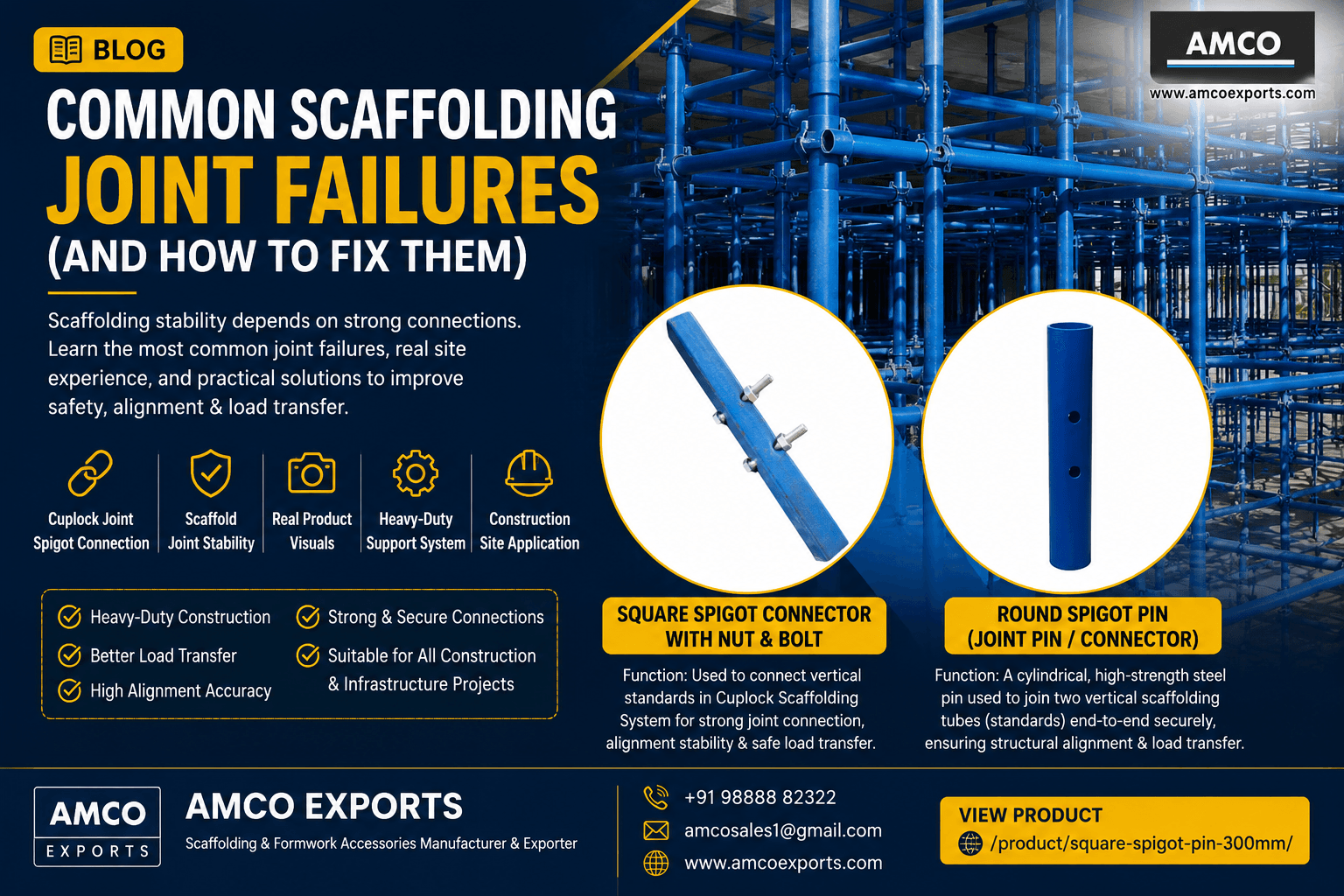
In Cuplock scaffolding systems, scaffold joint stability plays a major role in maintaining structural rigidity and alignment accuracy. Contractors frequently use Square Spigot Connectors with Nut & Bolt and Round Spigot Pins to reduce structural movement and improve scaffold connection strength during heavy-duty construction work.
What Are Scaffolding Joint Failures?
Scaffolding Joint Failures happen when scaffold connections become loose, misaligned, corroded, or structurally weak. These failures can create vibration, uneven load transfer, scaffold instability, and unsafe working conditions on construction sites.
Reliable scaffold joint systems improve alignment consistency, reduce scaffold movement, and support safer slab casting and infrastructure operations.
Why Scaffolding Joint Failures Matter in Cuplock Systems
Cuplock scaffolding systems depend heavily on proper scaffold alignment and secure vertical joint connections. Poor-quality scaffold connectors or weak scaffold joint fitment can reduce rigidity and create excessive structural play during heavy-load construction activities.
Square Spigot Connectors with Nut & Bolt are commonly used because tighter fitment helps reduce movement between scaffold standards and improves long-term structural performance.
Common Causes of Scaffolding Joint Failures
Modern construction projects require scaffold systems capable of handling continuous vertical load transfer, worker movement, vibration, and slab casting pressure. Weak scaffold joint systems often fail under demanding site conditions.
Loose Scaffold Connections
Loose scaffold joints create movement between vertical standards and reduce overall scaffold rigidity during construction activity.
Improper Scaffold Alignment
Poor scaffold alignment affects load transfer performance and can increase structural instability during slab support operations.
Corrosion and Rust Damage
Rust and corrosion weaken scaffold connector strength and reduce long-term durability in outdoor construction environments.
Weak Scaffold Connector Material
Low-quality scaffold accessories may fail under heavy-load conditions, especially during infrastructure and industrial projects.
How Square Spigot Connectors Improve Scaffold Stability
Square Spigot Connectors with Nut & Bolt are widely used in Cuplock scaffolding systems because they provide tighter scaffold joint fitment and improved alignment consistency between vertical standards.
These scaffold joint connectors help:
- Improve scaffold alignment
- Reduce structural vibration
- Support safer load transfer
- Minimize movement between standards
- Strengthen slab casting support systems
- Improve scaffold joint durability
Case Study: Scaffolding Joint Failures During Slab Casting
During a large slab casting project, contractors experienced excessive scaffold vibration and movement between vertical standards because of loose scaffold joint connections. Several low-quality scaffold connectors created alignment variation across the support structure.
After replacing damaged scaffold accessories with heavy-duty Square Spigot Connectors, the project team improved scaffold rigidity, reduced vibration, and achieved more stable load transfer performance throughout the slab casting operation.
How to Prevent Scaffolding Joint Failures
Use High-Quality Scaffold Connectors
Heavy-duty scaffold connectors improve long-term construction performance and reduce structural instability.
Inspect Scaffold Joint Systems Regularly
Routine inspection helps identify loose connections, rust damage, and alignment problems before major structural issues occur.
Maintain Proper Vertical Alignment
Correct alignment improves load distribution and overall scaffold system stability during heavy-duty operations.
Choose Reliable Cuplock Accessories
Reliable scaffold accessories support safer construction performance and improve scaffold durability in industrial environments.
Related Cuplock Scaffolding Articles
- Cuplock Joint Pin: Square vs Round Pin Comparison
- Square Spigot Connector with Nut & Bolt for Cuplock Systems
Construction Safety References
Reliable Cuplock Scaffold Accessories for Infrastructure Projects
Reliable Scaffold Joint Solutions for Construction Projects
AMCO EXPORTS manufactures heavy-duty scaffolding and formwork accessories for industrial, infrastructure, refinery, and commercial construction projects across India and export markets.
View Square Spigot ConnectorFrequently Asked Questions About Scaffolding Joint Failures
What causes scaffolding joint failures?
Improper fitment, poor welding quality, corrosion, weak scaffold connectors, and loose scaffold alignment are the most common causes of scaffolding joint failures.
Why are square spigot connectors used in Cuplock systems?
Square spigot connectors help improve scaffold alignment stability, reduce movement between standards, and support safer load transfer.
Why is scaffold alignment important?
Proper scaffold alignment improves structural rigidity, reduces vibration, and supports safer slab casting operations.
Which scaffolding systems use spigot connectors?
Cuplock scaffolding systems commonly use square spigot connectors and round spigot pins for connecting vertical standards securely.
Contact AMCO EXPORTS
📞 +91 98888 82322
📧 amcosales1@gmail.com
🌐 www.amcoexports.com