
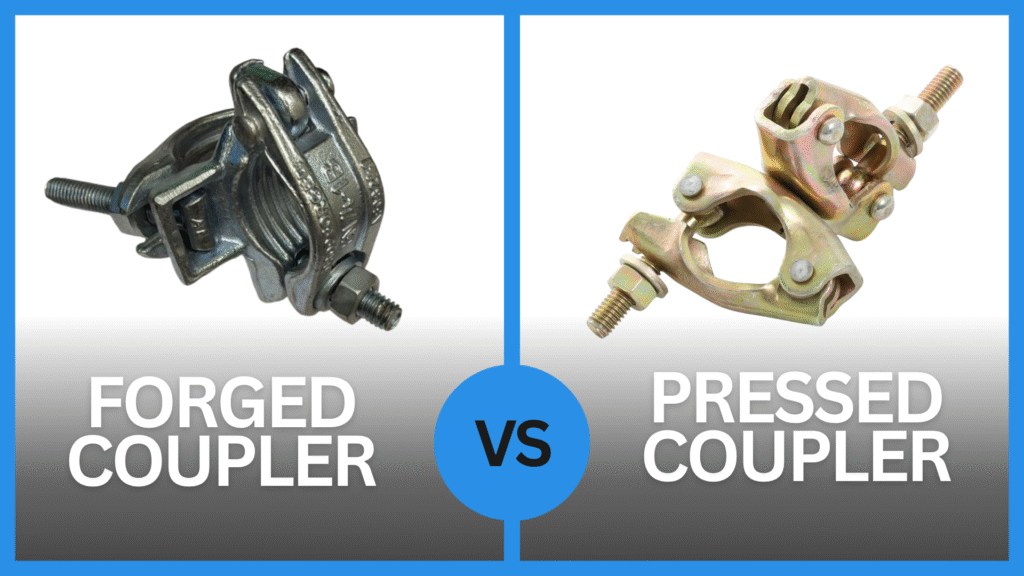
Forged vs Pressed Couplers: Why This Choice Matters
Choosing between forged vs pressed couplers is not just a technical decision — it directly affects site safety, load capacity and project reliability. Both types are widely used types of scaffolding couplers used in construction systems.
Many contractors select couplers based on price alone. But using the wrong type can lead to:
- Joint failure under load
- Reduced structural stability
- Frequent replacement and higher long-term costs
The right choice depends on application, load requirements, and project duration, not just budget.
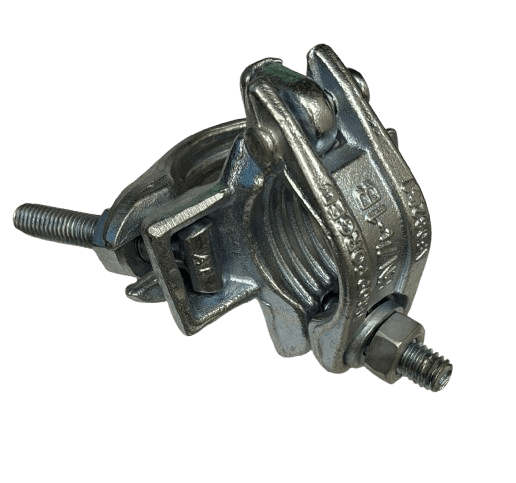
Forged Couplers in Forged vs Pressed Comparison
Forged couplers are manufactured using a hot forging process, where steel is compressed under high pressure. This creates a dense and uniform structure, making them ideal for heavy-duty applications.
Key Features of Forged Couplers
- High load-bearing capacity
- Strong resistance to impact and wear
- Longer service life
- Reliable performance under stress
Best Use of Forged Couplers
- High-rise construction
- Infrastructure and bridge projects
- Industrial scaffolding
- Long-term applications
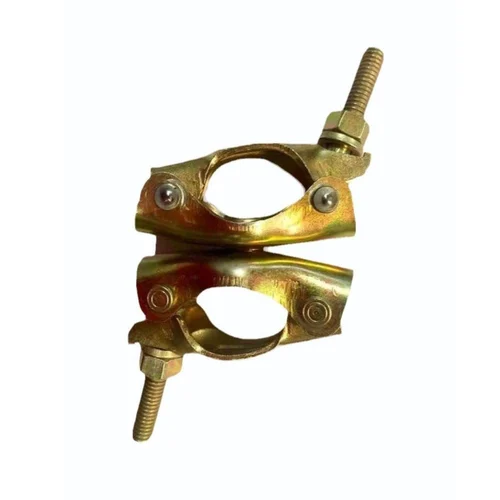
Pressed Couplers in Forged vs Pressed Comparison
Pressed couplers are made by shaping steel sheets through pressing. They are lighter and more economical, making them suitable for less demanding applications.
Key Features of Pressed Couplers
- Lightweight design
- Lower cost
- Easy handling and installation
- Suitable for temporary use
Best Use of Pressed Couplers
- Light-duty scaffolding
- Short-term construction projects
- Maintenance and repair work
- Budget-sensitive projects
Forged vs Pressed Couplers: Key Differences
| Feature | Forged Couplers | Pressed Couplers |
|---|---|---|
| Manufacturing | Hot forged under high pressure | Pressed from steel sheets |
| Strength | High load-bearing capacity | Medium strength |
| Durability | Long-lasting, wear-resistant | Moderate lifespan |
| Weight | Heavier | Lightweight |
| Cost | Higher initial cost | Budget-friendly |
| Best Use | Heavy-duty projects | Light-duty & temporary work |
Note: Load capacity may vary depending on material grade, manufacturing quality, and installation conditions. To understand how these couplers perform in real scaffold connections, read our right angle vs swivel coupler guide.
Strength Comparison of Forged vs Pressed Couplers
Forged couplers offer superior strength and structural reliability due to their dense metal composition. They maintain performance under heavy loads and harsh conditions.
Pressed couplers provide adequate strength for light-duty work, but under high stress they may:
- Bend or deform
- Reduce joint stability
- Increase maintenance requirements
For a better understanding of connection types, read our right angle vs swivel coupler comparison guide.
When to Use Forged vs Pressed Couplers
Choosing the right coupler depends on your project needs:
Use Forged Couplers if:
- Your project involves heavy loads
- You need long-term durability
- Safety is critical
Use Pressed Couplers if:
- The project is temporary
- Load requirements are low
- Budget is a key concern
Using the correct coupler improves both performance and cost efficiency.
Difference Between Forged and Pressed Couplers
The main difference between forged and pressed couplers lies in their manufacturing process and strength.
Forged couplers are stronger, more durable, and suitable for demanding applications. Pressed couplers are lighter, more affordable, and designed for lighter work.
In simple terms:
👉 Forged = strength and durability
👉 Pressed = cost efficiency and flexibility
Common Mistakes When Choosing Couplers
Many contractors make decisions based only on cost, which can lead to serious issues.
⚠️ Common mistakes include:
- Using pressed couplers in heavy-load structures
- Ignoring load capacity requirements
- Choosing low-quality materials
- Not matching coupler type with application
👉 These mistakes can result in safety risks and higher long-term costs
Forged vs Pressed Couplers: Final Decision Guide
If your project demands strength, safety, and long-term performance, forged couplers are the better choice.
If your focus is cost-saving and short-term use, pressed couplers can be a practical option.
👉 The best decision comes from balancing:
- Load requirements
- Project duration
- Budget
Planning a project?
Get in touch for high-quality forged and pressed couplers designed for real construction conditions.
📞 Call: +91 98888 82322
📧 Email: amcosales1@gmail.com
Explore our complete range of scaffolding Couplers including forged and pressed couplers designed for construction projects.
FAQs
What is the main difference between forged and pressed couplers?
Forged couplers are stronger and more durable, while pressed couplers are lighter and more economical.
Which coupler is better for heavy construction?
Forged couplers are better for heavy construction due to their high load capacity.
Are pressed couplers safe?
Yes, pressed couplers are safe for light-duty and temporary applications when used correctly.
Why are forged couplers more expensive?
Forged couplers require high-pressure manufacturing, making them stronger and more durable.
Can pressed couplers be used for long-term projects?
Pressed couplers are not recommended for long-term or heavy-load applications.
Follow AMCO Exports
Instagram: https://www.instagram.com/amcoexports/
LinkedIn: https://www.linkedin.com/in/amcoexports/