
Types of scaffolding couplers play an important role in construction safety, structural stability, and secure tube connections.
Scaffolding couplers connect scaffold tubes and help contractors build stable tube-and-coupler scaffolding systems. The right coupler, correct tube compatibility, proper tightening, and good installation all contribute to reliable scaffold performance.
This guide explains the different types of scaffolding couplers, their uses, applications, and selection considerations for construction and infrastructure projects.
👉 Looking for scaffolding couplers in bulk? AMCO Exports supplies different types of scaffolding couplers for contractors, builders, infrastructure companies, industrial projects, and export requirements.
Explore our complete scaffolding coupler range , including drop forged couplers and pressed scaffolding couplers .
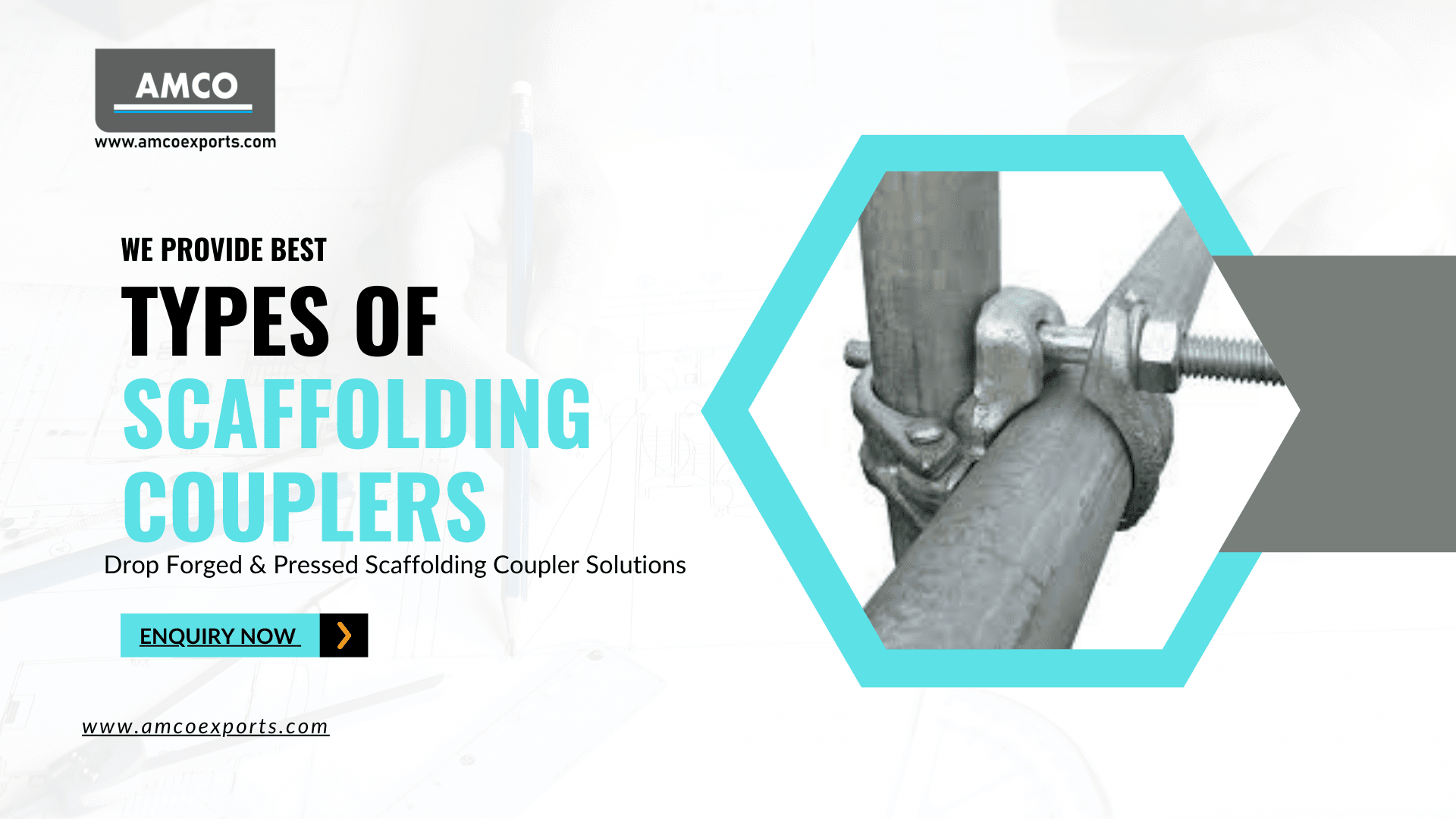
Types of Scaffolding Couplers Used in Construction
Construction projects use different coupler types for different tube connections. Your application determines the most suitable option.
1. Right Angle Type of Scaffolding Coupler
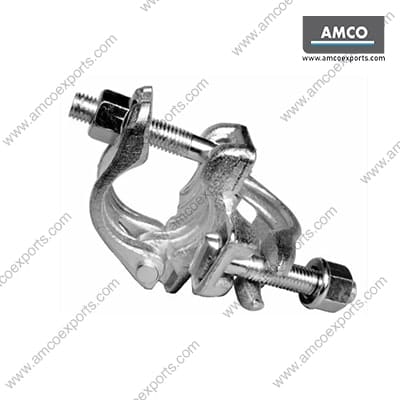
The right angle type of scaffolding coupler connects scaffold tubes at approximately 90 degrees. Contractors commonly use it to create rigid connections between standards, ledgers, and other scaffold tubes.
- Connects tubes at approximately 90 degrees
- Works commonly with standards and ledgers
- Creates rigid tube connections
- Supports many tube-and-coupler scaffolding arrangements
👉 Need a 90-degree scaffold connection? Choose a suitable right angle coupler.
2. Swivel Type of Scaffolding Coupler
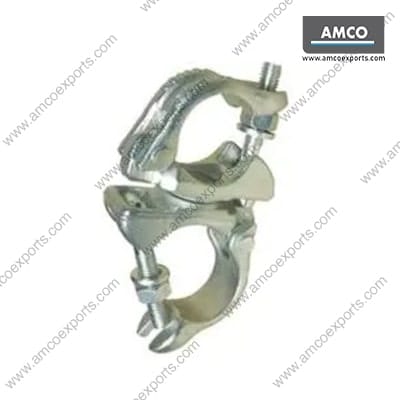
The swivel type of scaffolding coupler connects tubes at adjustable angles. Contractors commonly use it for diagonal bracing and angular scaffolding connections.
- Connects tubes at different angles
- Works well for diagonal bracing
- Allows flexible scaffold configurations
- Supports irregular or angled structures
👉 Choose a swivel coupler when your scaffold requires an adjustable-angle connection.
3. Sleeve Type of Scaffolding Coupler
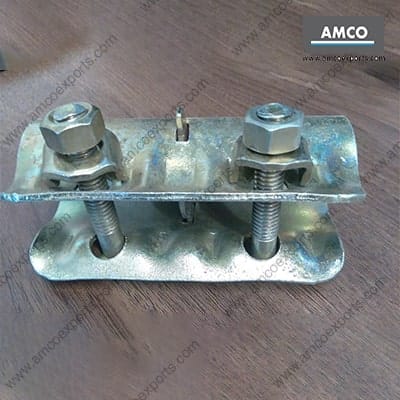
The sleeve type of scaffolding coupler connects scaffold tubes end-to-end when you need additional tube length.
- Joins scaffold tubes end-to-end
- Extends tube length
- Helps maintain tube alignment
- Works well for tube extension applications
4. Putlog Type of Scaffolding Coupler
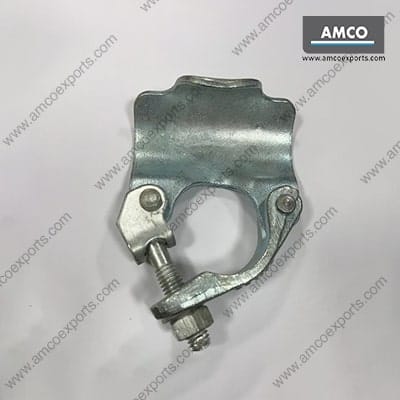
The putlog type of scaffolding coupler connects putlogs and transoms in suitable scaffolding and platform arrangements.
- Connects putlogs and transoms
- Works in suitable platform arrangements
- Supports specific scaffold connection requirements
- Works according to the overall scaffold design
5. Girder Type of Scaffolding Coupler
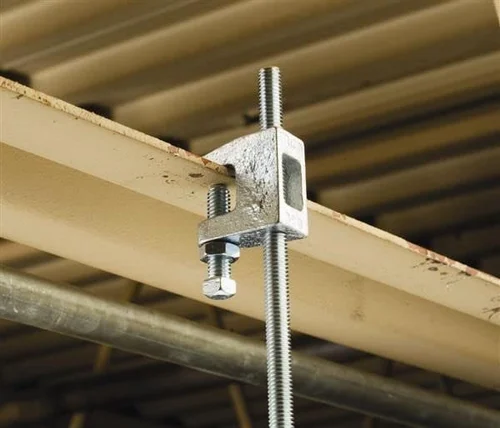
The girder type of scaffolding coupler connects suitable scaffolding components to structural steel beams or girders.
- Connects scaffolding to suitable steel beams
- Works in industrial applications
- Supports infrastructure and bridge projects
- Requires compatible structural members and correct installation
6. Board Retaining Type of Scaffolding Coupler
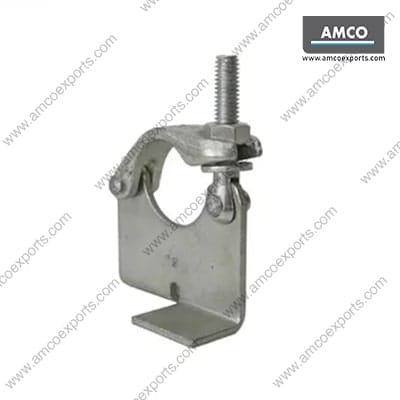
The board retaining type of scaffolding coupler helps secure scaffold boards and support platform stability in suitable applications.
- Helps retain scaffold boards
- Supports platform stability
- Works as a safety-related scaffold component
- Fits applications that require board-retaining support
7. Half Type of Scaffolding Coupler
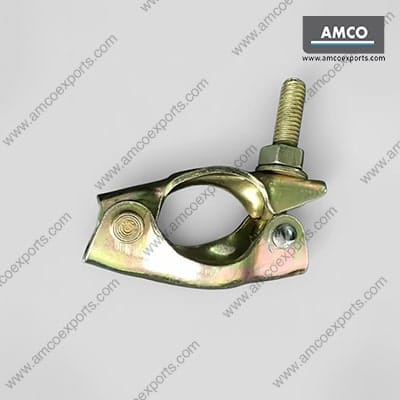
The half type of scaffolding coupler provides an option for temporary, specialized, or specific tube-fixing requirements.
- Supports specialized tube connections
- Works for suitable adjustment and fixing applications
- Offers quick installation for suitable setups
- Requires the correct product specification for each application
Butterfly Coupler Scaffolding
Butterfly coupler scaffolding refers to specialized coupler fittings that serve particular tube connection and fixing requirements. The product design determines the exact application.
If you need a butterfly coupler or another specialized scaffolding connector, first confirm the tube size, application, material, dimensions, and required specification.
Scaffolding Coupler Types Comparison
| Coupler Type | Main Use | Connection |
|---|---|---|
| Right Angle Coupler | Standards, ledgers and rigid scaffold connections | Approximately 90° |
| Swivel Coupler | Diagonal bracing and angular connections | Variable angle |
| Sleeve Coupler | Tube extension | End-to-end |
| Putlog Coupler | Putlog and transom connections | Scaffold-specific |
| Girder Coupler | Steel beam connections | Beam-to-tube |
| Board Retaining Coupler | Board and platform retention | According to system design |
| Half Coupler | Specialized tube fixing | According to application |
How to Choose the Right Scaffolding Coupler
Start with the connection you need. Then check the tube size, product specification, applicable standard, and requirements of the complete scaffolding system.
- 90-degree connections: Choose a suitable right angle coupler for a fixed 90-degree tube connection.
- Diagonal bracing: Choose a suitable swivel coupler when you need an adjustable-angle connection.
- Tube extension: Choose a suitable sleeve coupler to join tubes end-to-end.
- Platform connections: Choose putlog or other suitable fittings according to the scaffold design.
- Steel beam connections: Choose an appropriate girder coupler when the application allows its use.
Load Capacity of Scaffolding Couplers
Several factors affect scaffolding coupler performance. These include product design, material, strength class, tube condition, installation, tightening, connection arrangement, and the complete scaffolding system.
Do not apply one load-capacity value to every type of scaffolding coupler. Instead, check the manufacturer’s technical specification and applicable standard before using a coupler in a load-bearing application.
👉 Choose couplers according to the required application and technical specification, not price alone.
👉 Explore our complete range: Scaffolding Couplers
Industry Standards for Scaffolding Couplers
Check the applicable product requirements and standards before you purchase or use scaffolding couplers for a project.
- EN 74 – Couplers and related components for scaffolds and falsework
- BS 1139 – British Standard series covering scaffold components
- IS 2750 – Indian Standard relating to steel scaffold couplers
These standards help contractors and manufacturers evaluate product requirements, performance, and suitability for scaffolding applications.
For additional tube-and-coupler scaffold safety guidance, see OSHA Tube and Coupler Scaffold Guidelines .
Expert Insight: Choosing the Right Type of Scaffolding Coupler
At AMCO Exports, we manufacture and supply types of scaffolding couplers for contractors, infrastructure companies, industrial projects, and export markets.
When you select a type of scaffolding coupler, check the connection, tube compatibility, product specification, applicable standard, and installation requirements.
- 90-degree connections: Choose a suitable right angle coupler for fixed tube connections.
- Diagonal stability: Choose a suitable swivel coupler when you need an adjustable-angle connection.
- Height extension: Choose a suitable sleeve coupler to join tubes end-to-end.
- Platform connections: Choose putlog or other suitable fittings according to the scaffold design.
- Steel structure projects: Choose an appropriate girder coupler for compatible beam connections.
👉 Common mistake: Do not select a coupler only by price or appearance. Check tube compatibility and the required product specification first.
Why Contractors Choose AMCO Exports for Scaffolding Couplers
AMCO Exports is a scaffolding coupler manufacturer and supplier in India. We serve construction, infrastructure, industrial, and export requirements.
- ✔ Manufacturing experience since 1989
- ✔ Wide range of scaffolding components
- ✔ Bulk supply capability
- ✔ Product specifications for different applications
- ✔ Domestic and export supply
AMCO Exports supplies scaffolding components to contractors, builders, infrastructure companies, industrial buyers, and international customers.
Need Scaffolding Couplers for Your Project?
Get scaffolding coupler prices, product specifications and bulk quotation directly from AMCO Exports.
Right Angle | Swivel | Sleeve | Putlog | Girder | Board Retaining | Half Couplers
GET PRICE & QUOTATION ON WHATSAPP
Call / WhatsApp: +91 98888 82322
Bulk orders | Project requirements | Export enquiries
Related Scaffolding Guides
Tie Rod Price in India – Complete Guide
Tie Rod in Construction – Complete Guide
FAQs About Types of Scaffolding Couplers
What are the main types of scaffolding couplers?
The main types include right angle, swivel, sleeve, putlog, girder, board retaining, and half couplers. Manufacturers also offer specialized couplers for specific applications.
Which scaffolding coupler is used for 90-degree connections?
Right angle couplers connect scaffold tubes at approximately 90 degrees.
Which scaffolding coupler is used for diagonal bracing?
Swivel couplers connect scaffold tubes at different angles, which makes them suitable for many diagonal bracing applications.
What does a sleeve coupler do?
A sleeve coupler joins scaffold tubes end-to-end when a project needs additional tube length.
What does a putlog coupler do?
A putlog coupler connects putlogs or transoms in suitable scaffolding and platform arrangements.
What does a girder coupler do?
A girder coupler connects suitable scaffolding components to structural steel beams or girders.
What is the load capacity of scaffolding couplers?
The specific product determines the applicable load capacity. Material, strength class, tube condition, installation, tightening, connection arrangement, and the complete scaffolding system also affect performance. Check the manufacturer’s technical documentation before selecting a coupler for a load-bearing application.
What is the difference between forged and pressed couplers?
Manufacturers produce forged and pressed couplers through different manufacturing processes. The correct choice depends on the product specification, material, applicable standard, and intended application.
How many types of scaffolding couplers are there?
Construction projects use several types of scaffolding couplers. Common types include right angle, swivel, sleeve, putlog, girder, board retaining, and half couplers. Specialized couplers can also serve specific applications.
What is a butterfly coupler in scaffolding?
A butterfly coupler is a specialized scaffolding fitting that serves particular tube connection and fixing requirements. The product design determines its exact application.
Are scaffolding couplers the same as scaffolding clamps?
People sometimes use these terms interchangeably. However, a scaffolding coupler normally connects scaffold tubes, while different clamps can perform specialized fixing, retaining, or support functions.
Looking for Scaffolding Couplers in Bulk?
Tell us your coupler type, quantity, tube size, and delivery location. Our team can provide the relevant product specification and quotation.
AMCO Exports | Scaffolding Coupler Manufacturer & Supplier
“`