
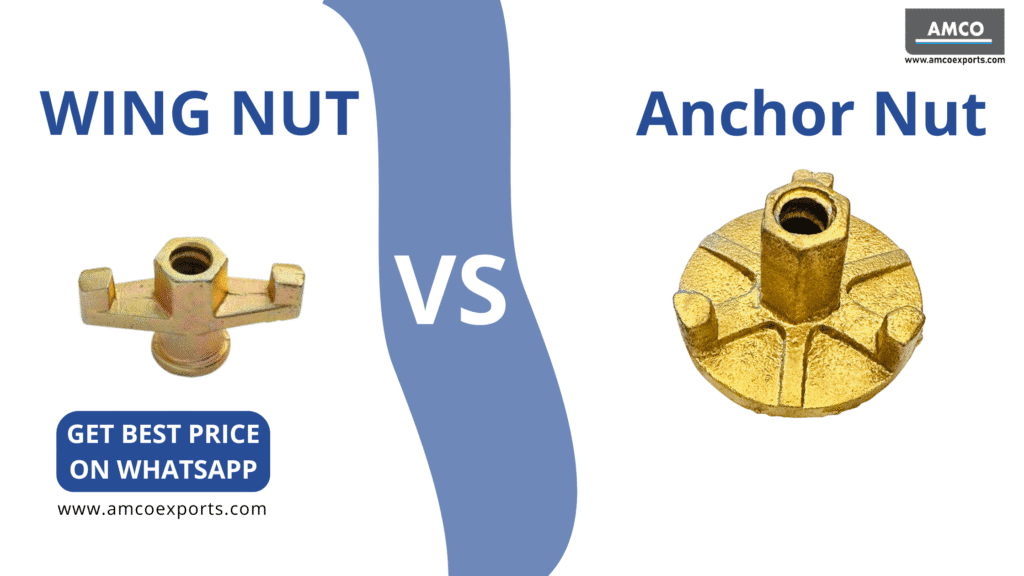
Wing Nut vs Anchor Nut is a common comparison in formwork and tie rod systems. Contractors often evaluate Wing Nut vs Anchor Nut based on load capacity, installation method, and application area before selecting the right fastening solution.
If you’re working with tie rod systems, understanding this difference can prevent failures, save cost, and improve site efficiency.
Table of Contents
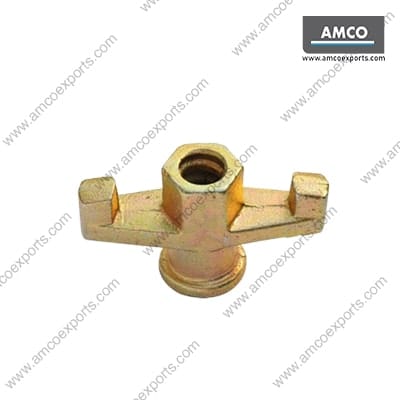
What Is a Wing Nut in Formwork?
A wing nut is a cast iron or ductile iron fastening component used with tie rods in concrete formwork systems.
It features two extended “wings” that allow manual tightening without additional tools.
Key Features:
- Used with 12mm, 16mm, or 17mm tie rods
- Enables quick installation and removal
- Ideal for repetitive shuttering cycles
- Common in slab and wall formwork
Wing nuts are widely used in high-cycle construction projects where speed matters.
👉 For heavy-duty applications, explore our high-strength wing nut for tie rod systems
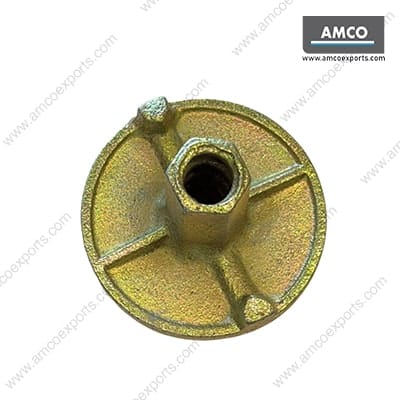
What Is an Anchor Nut?
An anchor nut is typically heavier and more compact. It is designed to provide stronger locking strength in high-pressure wall systems.
Key Characteristics:
- Greater load-bearing capacity
- Often tool-assisted tightening
- Used in heavy wall formwork
- Suitable for high concrete pressure zones
Anchor nuts are preferred when structural pressure is higher and locking reliability is critical.
| Feature | Wing Nut | Anchor Nut |
|---|---|---|
| Installation | Manual tightening | Tool-assisted |
| Speed | Fast removal | Slower but secure |
| Load Capacity | Medium to high | High |
| Application | Slabs & moderate walls | Heavy wall pressure |
Installation
Wing Nut: Manual tightening
Anchor Nut: Tool-assisted
Speed
Wing Nut: Fast removal
Anchor Nut: Slower but secure
Load Capacity
Wing Nut: Medium to high
Anchor Nut: High
Application
Wing Nut: Slabs & moderate walls
Anchor Nut: Heavy wall pressure
When Should You Choose a Wing Nut?
Choose a wing nut when:
- Fast stripping is required
- Multiple reuse cycles are expected
- Labor efficiency is important
- Standard wall and slab pressure conditions apply
Choose anchor nuts when concrete pressure is extreme and additional locking strength is necessary.
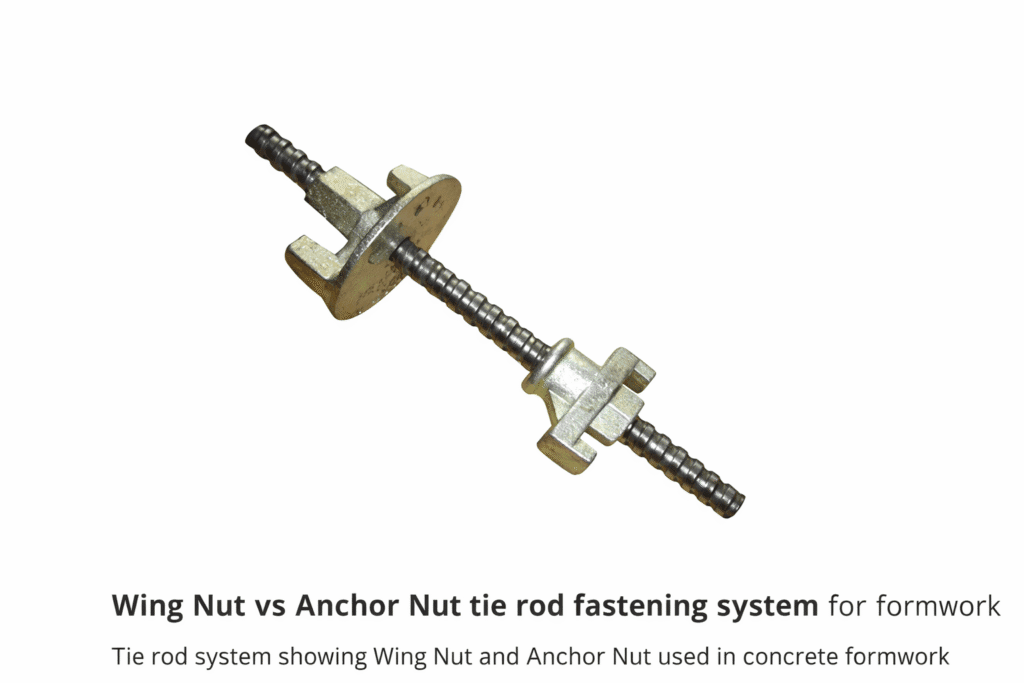
Final Verdict
Both components serve important roles in tie rod systems. The correct choice depends on pressure requirements, project speed, and safety considerations.
For most standard formwork applications, precision-cast wing nuts provide the ideal balance of strength and efficiency.
Looking for high-strength Wing Nuts for your formwork project?
Get precision-cast, load-tested wing nuts designed for durability and accurate threading.
📞 Call us today: +91 98888 82322
📧 Email: amcosales1@gmail.com
🌐 Website: www.amcoexports.com
Talk to our team for specifications, sizes, bulk pricing, and export inquiries.
Follow us:
Instagram: https://www.instagram.com/amcoexports/
LinkedIn: https://www.linkedin.com/in/amcoexports/
Frequently Asked Questions
Are wing nuts strong enough for wall formwork?
Yes, high-quality cast wing nuts can handle standard wall pressures when matched correctly with tie rods and used under proper load conditions.
What size wing nut is used with 16mm tie rod?
A 16mm threaded wing nut specifically designed for formwork tie rod systems should be used to ensure proper thread engagement and load stability.
Is anchor nut stronger than wing nut?
Anchor nuts generally provide higher load resistance due to their compact heavy casting and stronger locking mechanism, especially in high-pressure wall formwork systems.