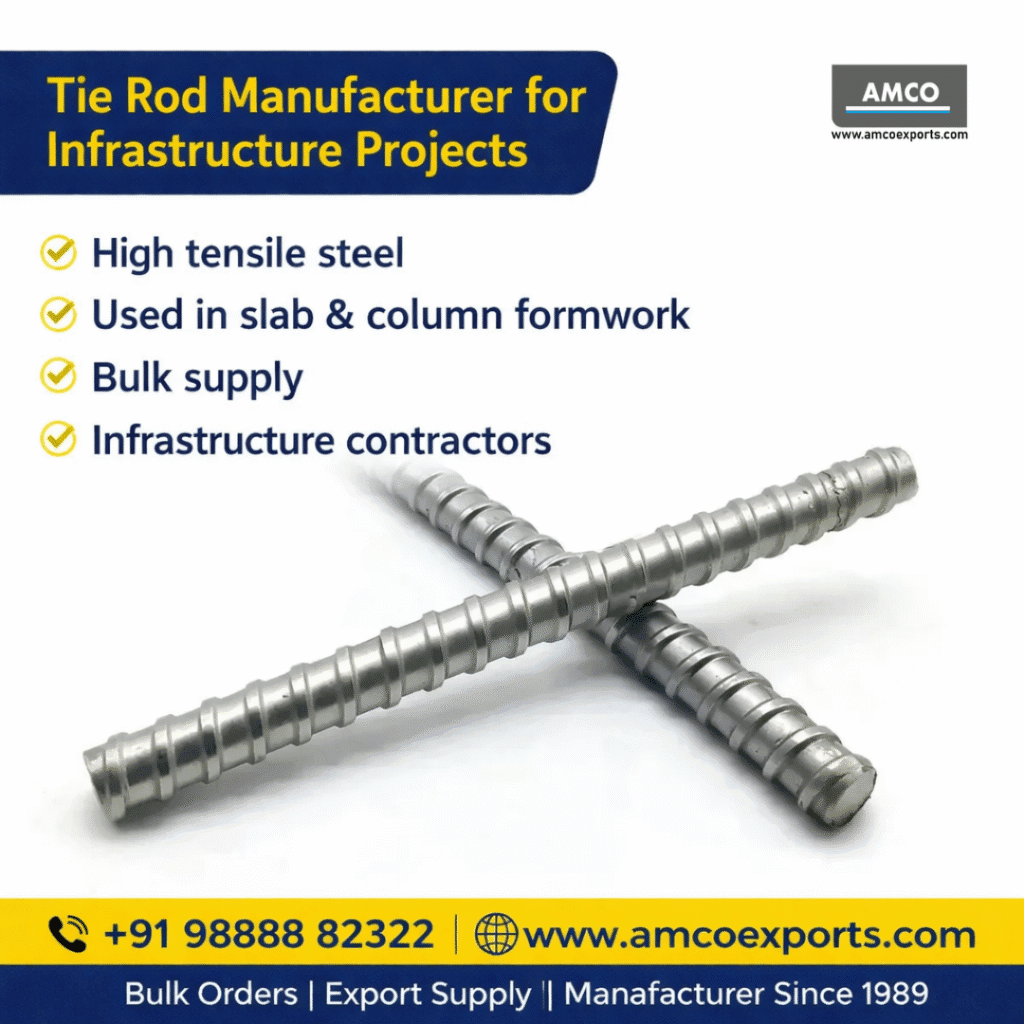
A tie rod in formwork helps hold opposing shuttering panels together during concrete casting. It works with compatible nuts, bearing plates and other fastening components to maintain the required spacing between panels and resist the lateral pressure of fresh concrete.
Contractors use formwork tie rod systems in wall shuttering, column formwork, retaining walls and other reinforced concrete construction applications. Correct component selection, compatible threading and proper installation are essential for a reliable formwork assembly.
For product specifications, available diameters and bulk enquiries, visit our Formwork Tie Rod product page.
What Is a Tie Rod in Formwork?
A formwork tie rod is a threaded steel component that connects opposing formwork panels and helps maintain their spacing during concrete placement. The rod works as part of a fastening system rather than as a standalone component.
Depending on the formwork design, the assembly may include:
- Formwork tie rods for connecting the panels.
- Wing nuts or other compatible nuts for tightening.
- Waller plates or bearing plates to distribute force across the formwork surface.
- Spacers or sleeves where the formwork design requires them.
The exact components depend on the formwork system, connection design and project specifications.
How Does a Formwork Tie Rod Work?
Fresh concrete applies pressure to the formwork panels. The tie rod assembly helps resist this outward force and keeps the panels at the required spacing while the concrete is placed.
- Position the panels: Arrange the shuttering panels according to the approved formwork design.
- Install the tie rod: Fit the rod through the designated openings or connection points.
- Fit compatible accessories: Install the specified nuts, plates and other fastening components.
- Check the assembly: Verify alignment, connections and tightening in accordance with the project requirements.
- Inspect before pouring: Have the formwork assembly checked by the responsible site team before concrete placement.
Never select a tie rod or fastening component based on diameter alone. The complete system must meet the project’s design requirements and expected concrete pressure.
Why Are Tie Rods Important in Concrete Formwork?
- Panel restraint: Help keep opposing shuttering panels connected during concrete placement.
- Wall thickness control: Help maintain the specified spacing between panels.
- Formwork alignment: Support the intended geometry of the shuttering assembly.
- Force transfer: Transfer forces through the compatible tie rod and fastening arrangement.
- Reusable equipment: Suitable components may be reused after inspection, subject to their condition and system requirements.
Where Are Formwork Tie Rods Used?
Formwork tie rod systems serve a range of concrete construction applications, including:
- Wall formwork: Connect opposing panels during concrete wall construction.
- Column shuttering: Support compatible shuttering arrangements for reinforced concrete columns.
- Beam formwork: Form part of the specified fastening arrangement for concrete beams.
- Retaining walls: Help restrain formwork panels when used in an appropriately designed system.
- Infrastructure projects: Support formwork assemblies used in bridges, tunnels and other concrete structures where specified.
- Industrial construction: Serve in concrete formwork for industrial buildings and facilities.
Types of Tie Rods Used in Formwork
Different formwork systems require different tie rod designs, thread profiles and connection arrangements. Buyers should confirm the system requirements before ordering.
1. Threaded Formwork Tie Rod
Threaded tie rods work with compatible nuts and bearing components to secure formwork panels. Diameter, thread profile, length and material grade must match the intended application.
2. Heavy-Duty Formwork Tie Rod
Heavy-duty configurations serve applications that require a specified higher resistance to tensile forces. The project design and verified technical ratings should determine suitability.
3. T-Type Tie Rod
A T-type tie rod uses a T-shaped head as part of its fastening arrangement. Its application depends on the design of the formwork or support system.
Explore T-Type Tie Rods from AMCO Exports for product-specific information.
How to Choose the Right Formwork Tie Rod
Before placing an order, check the following points with your formwork supplier or project engineer:
- Diameter and thread profile: Confirm that the rod matches the specified nuts and connection system.
- Length: Select a length that accommodates the panel arrangement and required fastening components.
- Material grade: Verify the material and mechanical properties required by the design.
- Expected loading: Base selection on the calculated formwork forces and the verified capacity of the complete assembly.
- Accessories: Check compatibility with wing nuts, anchor nuts, waller plates and other system components.
- Site conditions: Consider exposure, handling, inspection and reuse requirements.
- Quantity and delivery: Confirm order quantities, production requirements, finish and delivery location.
Do not use a general-purpose size chart as a substitute for project-specific engineering calculations. A qualified professional should verify the complete formwork system before use.
Common Formwork Tie Rod Problems to Check
- Thread damage: Worn or deformed threads may prevent proper engagement with the nut.
- Incorrect components: Incompatible thread profiles or accessories can compromise the connection.
- Bent rods: Deformation may affect installation and performance.
- Corrosion or visible damage: Inspect the rod and accessories before reuse.
- Incorrect tightening: Follow the formwork system’s specified installation procedure rather than guessing the tightening force.
Remove damaged or questionable components from service until a competent person determines whether they remain suitable for use.
Formwork Tie Rods and Compatible Accessories
A formwork tie rod system relies on compatible components. Depending on the design, these may include:
- Formwork wing nuts
- Tie rods
- Anchor nuts
- Waller plates
- Water stoppers for applications that require them
Confirm the thread profile, dimensions and intended function of each component before assembling the system.
Formwork Tie Rod Supply from AMCO Exports
AMCO Exports manufactures and supplies formwork tie rods and related construction accessories from Jalandhar, Punjab, India. Buyers can enquire about available diameters, material grades, thread configurations, lengths and bulk supply options.
Share your required specifications and quantity so our team can review your enquiry and confirm suitable options, pricing and delivery details.
- Manufacturer-direct enquiries
- Bulk order requirements
- Product and thread specification enquiries
- Domestic and export supply enquiries
View product specifications: Formwork Tie Rod Manufacturer in India
Call or WhatsApp: +91 98888 82322
Email: amcosales1@gmail.com
Frequently Asked Questions About Tie Rods in Formwork
What is a tie rod in formwork?
A tie rod in formwork connects opposing shuttering panels and helps maintain their spacing while resisting the lateral pressure generated during concrete placement.
What is a formwork tie rod used for?
It forms part of a fastening system that restrains formwork panels during concrete casting. The complete assembly must match the formwork design and project requirements.
Which accessories work with formwork tie rods?
Depending on the system, compatible accessories may include wing nuts, anchor nuts, waller plates and other specified fastening components.
How do I select the correct tie rod size?
Confirm the required diameter, thread profile, length, material grade and design loading with the project engineer or formwork supplier. The complete assembly must meet the specified requirements.
Can formwork tie rods be reused?
Some tie rods are designed for repeated use. Inspect them before reuse and follow the manufacturer’s guidance and site inspection procedures. Do not reuse damaged or unsuitable components.
Do you supply formwork tie rods in bulk?
AMCO Exports accepts enquiries for bulk formwork tie rod supply. Contact the team with your required dimensions, thread configuration, quantity and delivery destination for a quotation.
How can I request a formwork tie rod quotation?
Visit the Formwork Tie Rod product page, call or WhatsApp +91 98888 82322, or email amcosales1@gmail.com with your requirements.



Great informative blog! I really appreciate how clearly you explained the role of tie rods in maintaining formwork stability and handling concrete pressure. It highlights how these components ensure proper alignment, prevent bulging, and improve construction quality and safety . Very useful insights for anyone in the construction field—keep sharing such valuable content!
Thank you for your valuable feedback! Glad you found the blog informative and helpful.
Formwork tie rods play a key role in maintaining stability and handling concrete pressure effectively. We’ll continue sharing more useful insights for the construction industry. Appreciate your support!
This post was incredibly informative! I had no idea about the different types of tie rods used in formwork and their specific applications. The clarity on how each type contributes to structural integrity was particularly helpful. Thanks for sharing such valuable insights!