
Looking for 12mm rod weight or a complete tie rod weight chart? The weight of a tie rod depends mainly on its diameter and length. This guide provides the approximate weight per meter for 12mm, 16mm, 20mm and 25mm tie rods, along with a practical tie rod size chart for construction and formwork applications.
Explore our tie rod products: Tie Rod for Formwork , 12mm Tie Rod , 16mm Tie Rod , 20mm Tie Rod , and 25mm Tie Rod .
For quick reference, a 12mm steel rod weighs approximately 0.89 kg per meter, while a 25mm steel rod weighs approximately 3.86 kg per meter. Actual manufactured weight can vary depending on steel grade, thread profile, manufacturing tolerances and the finished rod configuration.
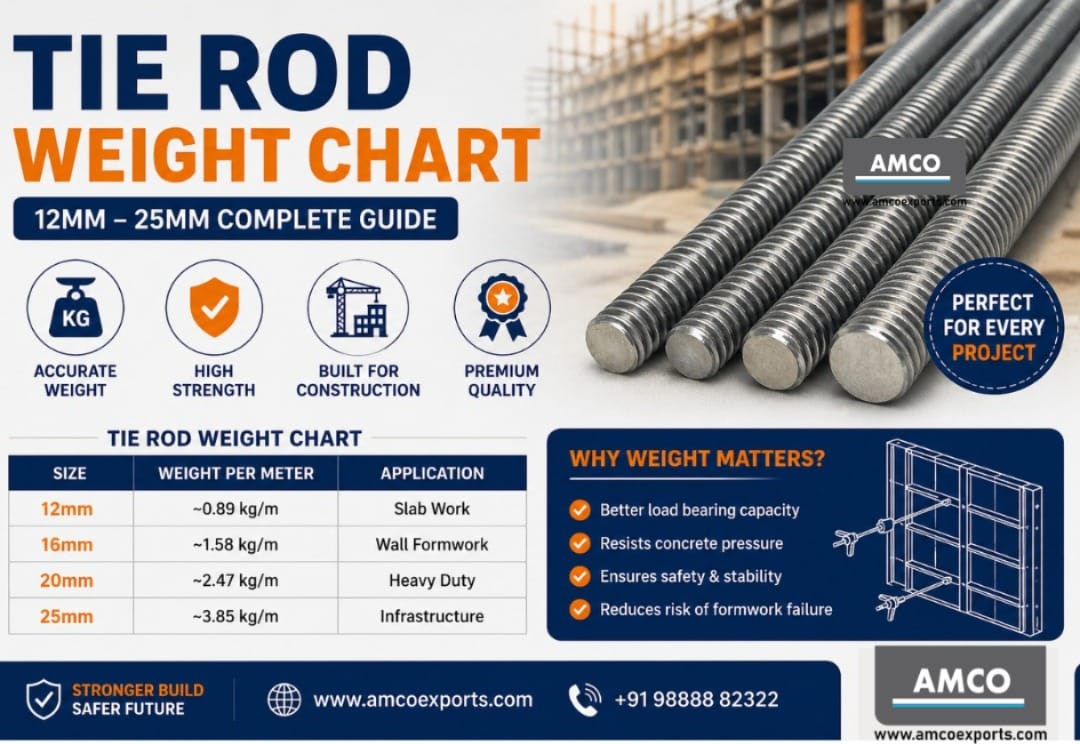
12mm, 16mm, 20mm & 25mm Tie Rod Weight Chart
The following table shows the approximate theoretical weight of solid steel rod by diameter. These values are useful for estimating material requirements, transportation weight and approximate rod weight before purchasing.
| Tie Rod Size | Weight per Meter | Approx. Weight per 3m | Approx. Weight per 6m |
|---|---|---|---|
| 12mm | 0.89 kg/m | 2.67 kg | 5.33 kg |
| 16mm | 1.58 kg/m | 4.74 kg | 9.47 kg |
| 20mm | 2.47 kg/m | 7.40 kg | 14.80 kg |
| 25mm | 3.86 kg/m | 11.57 kg | 23.15 kg |
12mm Rod Weight per Meter
12mm rod weight is approximately 0.89 kg per meter for a solid steel rod based on the standard theoretical steel-weight calculation.
For example:
- 1 meter: approximately 0.89 kg
- 3 meters: approximately 2.67 kg
- 4 meters: approximately 3.55 kg
- 6 meters: approximately 5.33 kg
The actual weight of a manufactured tie rod may differ because tie rods can have threads, reduced sections, end configurations or other manufacturing features.
16mm Rod Weight per Meter
A 16mm steel rod weighs approximately 1.58 kg per meter. The exact finished weight of a tie rod depends on its design, length, threading and manufacturing specification.
A 6-meter theoretical solid steel rod of 16mm diameter weighs approximately 9.47 kg.
20mm Rod Weight per Meter
A 20mm steel rod weighs approximately 2.47 kg per meter. This figure can be used for preliminary material and transportation calculations.
For a theoretical 6-meter length, the approximate weight is 14.80 kg.
25mm Rod Weight per Meter
25mm rod weight is approximately 3.86 kg per meter for a solid steel rod. A theoretical 3-meter length weighs approximately 11.57 kg, while a 6-meter length weighs approximately 23.15 kg.
How to Calculate Steel Rod Weight
A commonly used theoretical formula for calculating the weight of a solid steel rod is:
Here, the diameter is measured in millimeters.
For example, for a 12mm rod:
This calculation gives an approximate theoretical weight for solid steel. The actual weight of a finished tie rod should be confirmed from the manufacturer’s product specification.
Tie Rod Size Chart for Construction
| Size | Approx. Weight/m | Typical Consideration |
|---|---|---|
| 12mm | 0.89 kg/m | Light-duty and suitable applications depending on the formwork design |
| 16mm | 1.58 kg/m | Common size used in various formwork applications |
| 20mm | 2.47 kg/m | Used where the formwork design requires a larger diameter rod |
| 25mm | 3.86 kg/m | Used for applications requiring larger diameter tie rods |
Why Tie Rod Diameter and Weight Matter
Tie rod diameter is an important factor when selecting components for a formwork system. However, weight should not be treated as a direct measure of allowable load capacity. The safe working capacity of a tie rod depends on factors such as steel grade, thread geometry, effective tensile area, connection details, installation and the complete formwork system.
For purchasing and logistics, weight is particularly useful for estimating total material quantity, transportation requirements and approximate shipment weight.
How to Choose the Right Tie Rod Size
The appropriate tie rod should be selected according to the engineering requirements of the formwork system rather than diameter alone. Before ordering, consider:
- Required rod diameter and length
- Steel grade and material specification
- Thread type and thread pitch
- Formwork design and expected loads
- Required accessories such as wing nuts and washers
- Actual manufacturer weight and dimensional tolerances
For structural or load-bearing applications, the tie rod specification should be confirmed by the project engineer or responsible technical professional.
Related Tie Rod Guides
Tie Rod in Construction – Complete Guide
Frequently Asked Questions
What is the weight of a 12mm rod?
A theoretical solid 12mm steel rod weighs approximately 0.89 kg per meter. The actual weight of a finished tie rod can vary depending on its length, threading, steel grade and manufacturing configuration.
What is 12mm rod weight per meter?
The approximate theoretical weight of a 12mm solid steel rod is 0.89 kg/m. For a 6-meter length, the theoretical weight is approximately 5.33 kg.
What is the weight of a 16mm rod?
A theoretical solid 16mm steel rod weighs approximately 1.58 kg per meter. A 6-meter length weighs approximately 9.47 kg.
What is the weight of a 20mm rod?
A theoretical solid 20mm steel rod weighs approximately 2.47 kg per meter. A 6-meter length weighs approximately 14.80 kg.
What is the weight of a 25mm rod?
A theoretical solid 25mm steel rod weighs approximately 3.86 kg per meter. A 6-meter length weighs approximately 23.15 kg.
What is the formula for calculating rod weight?
For a solid steel rod, a commonly used theoretical calculation is: Diameter² ÷ 162 = approximate weight per meter in kg.
Does tie rod weight determine its load capacity?
No. Weight alone does not determine the safe working load of a tie rod. Load capacity depends on factors including steel grade, effective tensile area, thread design, connection details and the overall formwork system.
Does tie rod price depend on weight?
Material weight is one factor that can influence tie rod pricing. Other factors include steel grade, diameter, length, threading, manufacturing process, surface finish, quantity and market conditions.
AMCO Exports – Tie Rod Manufacturer & Supplier
AMCO Exports manufactures and supplies tie rods for construction, formwork and infrastructure applications. Tie rods are available in different diameters, lengths, grades and thread configurations according to project and buyer requirements.
For bulk orders, export requirements or product specifications, contact AMCO Exports for current availability and technical details.
Construction Safety Reference
For general construction safety requirements and workplace safety guidance, refer to the OSHA Construction Safety resources.