In wall formwork systems, a tie rod is the component that holds everything together under extreme concrete pressure. Without it, panels separate, walls deform, and structural alignment fails.
A tie rod in formwork connects opposite shuttering panels and resists lateral pressure generated during concrete pouring. When selected correctly, it maintains wall thickness, structural stability, and site safety. When selected incorrectly, it becomes a failure point.
Understanding how tie rods function is critical for contractors working on high-rise buildings, retaining walls, industrial foundations, oil & gas structures, and infrastructure projects.
What Is a Tie Rod in Formwork?
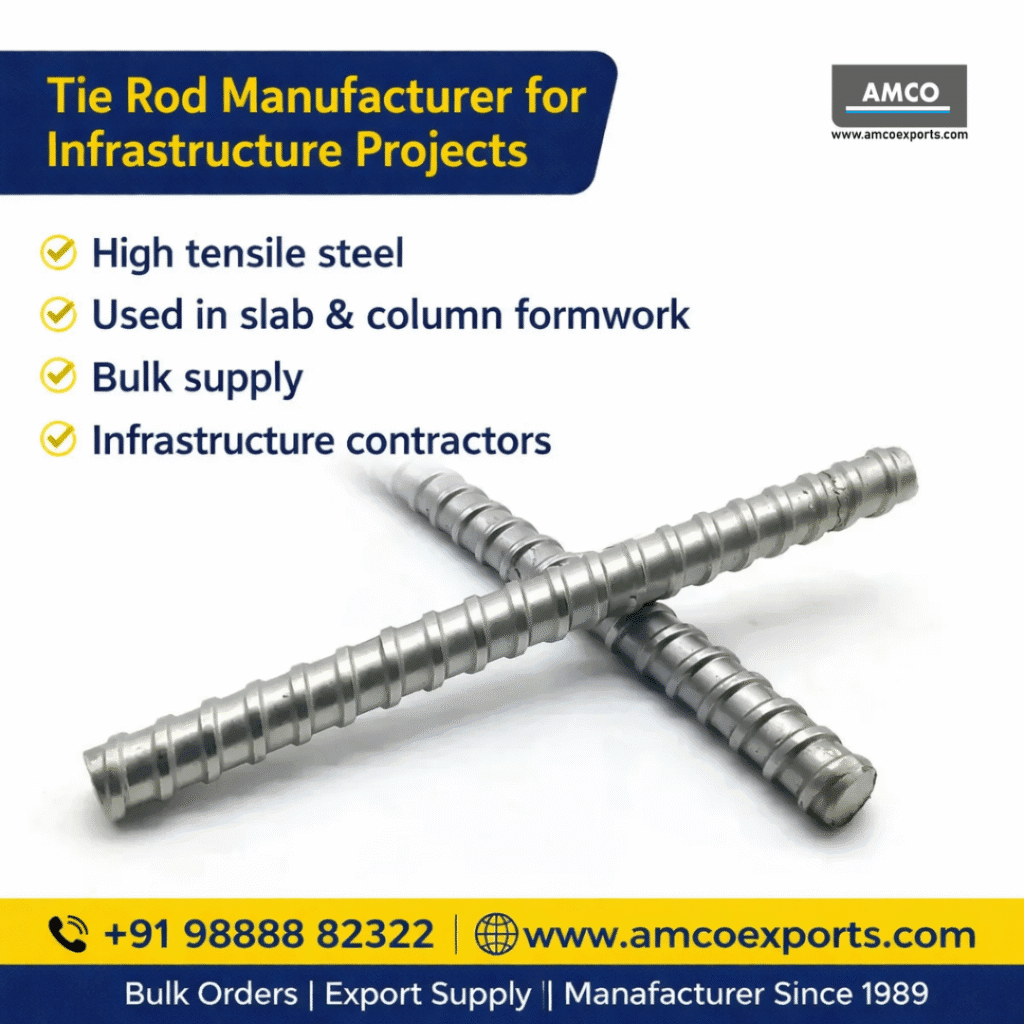
A tie rod is a high-tensile threaded steel bar used in concrete wall formwork systems. It passes A tie rod is a high-tensile threaded steel bar used to maintain uniform wall thickness during concrete casting. It runs through both formwork panels and is secured externally with fastening components.
A complete system typically includes:
- Threaded steel rod
- Wing nut
- Washer or bearing plate
- Spacer tube (depending on system design)
If the fastening components are incompatible, pressure distribution becomes uneven. That is why thread precision and matching hardware matter.
You can review compatible fastening systems here:
https://www.amcoexports.com/product/wing-nut-tie-rod/
How Tie Rods Resist Concrete Pressure
A Concrete exerts outward pressure that increases with wall height and pour speed. The tie rod absorbs this force and distributes it evenly across the formwork system.
When the rod diameter, steel grade, or threading accuracy is insufficient, panels may bulge or shift. Over time, repeated stress cycles also weaken improperly manufactured rods.
For a deeper understanding of fastening failure risks, you can read:
https://www.amcoexports.com/wing-nut-failure/
Notice how that article focuses on fastening breakdown scenarios rather than repeating this page’s topic. That creates topical depth without duplication.
Why Tie Rod Selection Matters
Many contractors treat tie rods as standard hardware. That assumption causes problems.
Concrete pressure increases based on:
- Wall height
- Pour rate
- Temperature
- Concrete mix consistency
A mismatch between tie rod size and wall pressure can result in:
- Formwork bulging
- Misalignment
- Sudden breakage
- Concrete leakage
- Project delays
Selecting the right diameter and tensile grade directly impacts structural integrity.
Why Size and Grade Selection Matter
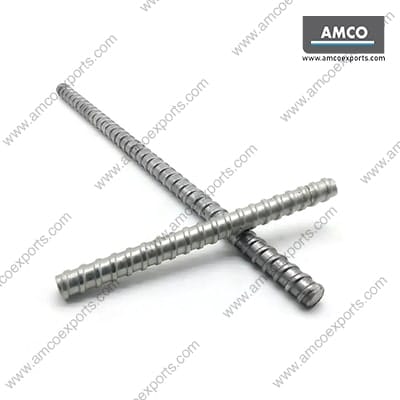
12mm Tie Rod
Used for light slab and low-height wall applications.
16mm Tie Rod
Standard for most commercial wall formwork systems.
17mm Tie Rod
Preferred in heavy-duty industrial projects, oil & gas facilities, and high-pressure wall systems.
Choosing the correct size reduces stress concentration and increases load-bearing reliability.
Industrial Applications Where Tie Rod Accuracy Is Critical
Performance becomes especially important in:
- Oil & gas facilities
- Refinery construction
- Marine and shipbuilding projects
- Infrastructure retaining walls
- High-rise core walls
In these sectors, hardware endures repeated load cycles and environmental exposure. Precision manufacturing reduces long-term structural risk.
To explore the full range of scaffolding and formwork hardware systems, visit:
https://www.amcoexports.com/
Warning Signs of Tie Rod Failure Risk
Contractors should inspect tie rods before reuse.
Look for:
- Worn or flattened threads
- Corrosion buildup
- Bent shafts
- Uneven tightening resistance
- Visible deformation after stripping
Preventive inspection significantly reduces structural risk during concrete pours.
For additional insights into fastening system failures, read:
https://www.amcoexports.com/wing-nut-failure/
Why Manufacturing Accuracy Matters
Dimensional precision affects load distribution.
Accurate threading ensures:
- Proper wing nut engagement
- Even pressure transfer
- Reduced stress concentration
- Longer service life
Inferior machining increases the likelihood of stripping and cracking, especially in high-load environments.
AMCO Exports manufactures precision-cast scaffolding and formwork hardware engineered for repeated industrial use. Learn more here:
https://www.amcoexports.com/
Final Takeaway for Contractors and Site Engineers
A tie rod in formwork is not a minor accessory. It is a structural safety component.
Failure typically occurs due to:
- Incorrect size selection
- Poor thread compatibility
- Substandard material grade
- Over-tightening
- Reuse without inspection
Preventing failure starts with proper hardware selection and systematic inspection.
If your projects involve high-pressure wall systems, industrial foundations, refinery construction, or infrastructure builds, reviewing fastening system specifications before pouring concrete is a critical step.
Explore heavy-duty tie rod and wing nut options here:
https://www.amcoexports.com/product/wing-nut-tie-rod/
For bulk supply, export inquiries, or technical assistance:
📞 +91 98888 82322
📧 amcosales1@gmail.com
For visual references of formwork fastening systems and scaffolding hardware used in construction projects, you can also explore our image collection here:
https://in.pinterest.com/amcoexports/
Concrete pressure increases significantly in tall wall systems, which is why fastening hardware must resist lateral load. Basic pressure calculations can be reviewed here:
https://www.engineeringtoolbox.com/concrete-pressure-formwork-d_949.html
Frequently Asked Questions
What is a tie rod in formwork?
A tie rod in formwork is a high-tensile threaded steel bar used to hold shuttering panels together during concrete pouring. It resists lateral concrete pressure and maintains the correct wall thickness.
What size tie rods are used in formwork systems?
Common tie rod sizes used in concrete formwork are 12mm, 16mm, and 17mm. The correct size depends on wall height, concrete pressure, and structural requirements of the project.
How does a tie rod system work in concrete formwork?
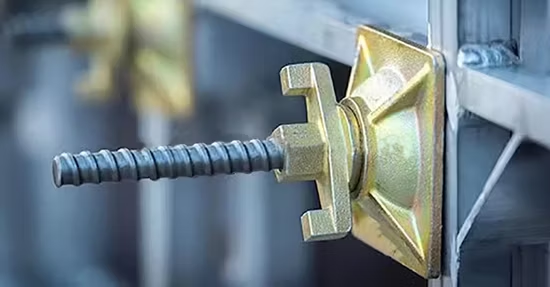
A tie rod passes through both formwork panels and is secured with wing nuts and bearing plates on each side. This fastening system distributes pressure evenly and prevents formwork panels from separating during concrete pouring.
Can tie rods be reused in construction projects?
Yes, tie rods can be reused if they are inspected properly. Contractors should check for thread wear, bending, corrosion, or deformation before reuse to ensure structural safety.
Why is thread compatibility important for tie rods?
Thread compatibility between the tie rod and wing nut ensures proper load distribution. Incorrect threading may lead to stripping, uneven tightening, and possible formwork failure during concrete pours.


Great informative blog! I really appreciate how clearly you explained the role of tie rods in maintaining formwork stability and handling concrete pressure. It highlights how these components ensure proper alignment, prevent bulging, and improve construction quality and safety . Very useful insights for anyone in the construction field—keep sharing such valuable content!
Thank you for your valuable feedback! Glad you found the blog informative and helpful.
Formwork tie rods play a key role in maintaining stability and handling concrete pressure effectively. We’ll continue sharing more useful insights for the construction industry. Appreciate your support!