
Right angle vs swivel coupler is one of the most common comparisons in scaffolding systems, especially when selecting the right connection for safety and load performance, but they serve different purposes depending on structure and application.Both are important types of scaffolding couplers used in construction
Right angle and swivel couplers are both essential types of scaffolding couplers, but they serve different purposes depending on structure and application.
Understanding right angle vs swivel helps contractors choose the correct coupler for structural strength and stability.
- The difference between right angle and swivel couplers
- Load capacity comparison
- When to use each type
- Which coupler is best for your project
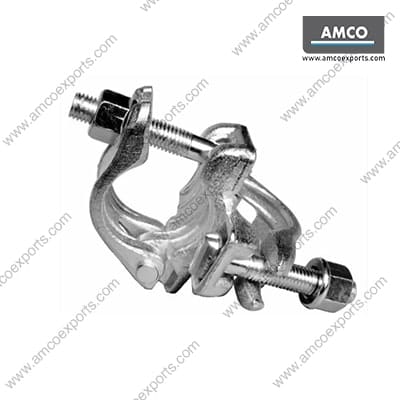
What is a Right Angle Coupler?
A right angle coupler (also called a double coupler) is used to connect two scaffold tubes at a 90-degree angle.
Key Features:
- Fixed connection
- High load-bearing strength
- Strong grip on tubes
Best Use:
- Structural framework
- Vertical and horizontal joints
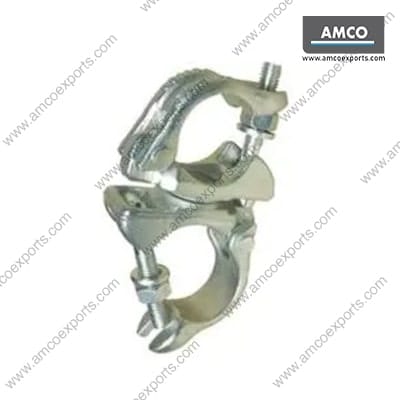
What is a Swivel Coupler?
A swivel coupler is designed to connect scaffold tubes at any angle, allowing flexibility in scaffolding structures.
Key Features:
- Rotating connection
- Medium load capacity
- Ideal for diagonal bracing
Best Use:
- Irregular structures
- Stability reinforcement
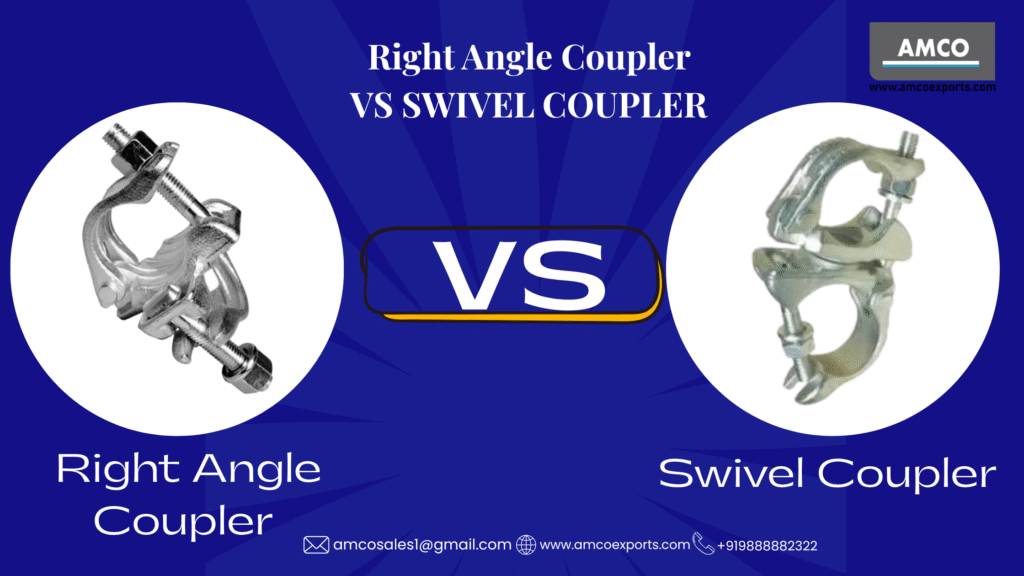
Right Angle vs Swivel Coupler Comparison (Uses & Load Capacity)
| Feature | Right Angle Coupler | Swivel Coupler |
|---|---|---|
| Connection Type | 90° fixed | Adjustable angle |
| Load Capacity | High | Medium |
| Function | Structural joint | Bracing |
| Strength | Strong | Flexible |
| Usage | Load-bearing | Stability support |
Load Capacity Comparison of Scaffolding Couplers
Load capacity is one of the most important factors when choosing between these two couplers.
- Right angle coupler: 6–9 kN slip load
- Swivel coupler: 5–7 kN slip load
👉 Right angle couplers are always preferred for primary structural joints, while swivel couplers are used for support and flexibility.
When to Use Right Angle and Swivel Couplers
Choose right angle couplers when:
- You need rigid 90-degree connections
- The structure carries heavy load
- Building main scaffolding framework
Use swivel couplers when:
- Structure requires angular connections
- Diagonal bracing is needed
- Stability and flexibility are required
Common Mistakes in Right Angle vs Swivel Coupler Usage
- Using swivel couplers for load-bearing joints
- Overloading swivel connections
- Improper tightening of bolts
- Mixing low-quality couplers
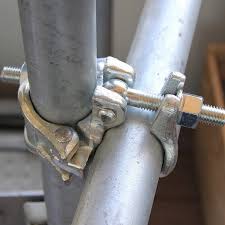
Applications of Right Angle and Swivel Couplers
Both couplers are used in:
- Building construction
- Industrial scaffolding
- Infrastructure projects
- Oil & gas installations
Right Angle vs Swivel Coupler: Final Comparison
Both right angle and swivel couplers play important roles in scaffolding systems, but they serve different purposes. In summary, the right angle vs swivel coupler decision depends on load requirements and structure type.
Choosing the correct coupler ensures:
- Better structural stability
- Proper load distribution
- Safer construction
In summary, choosing between right angle and swivel couplers depends on load requirements, structure type, and application. Using the correct coupler ensures better stability, safety, and long-term performance in scaffolding systems.
Explore our complete range of scaffolding accessories including couplers, clamps, and formwork components designed for construction and industrial projects.
Get High-Quality Couplers from AMCO Exports
We manufacture:
✔ Right angle (double) couplers
✔ Swivel couplers
✔ Forged and pressed variants
Trusted by contractors and infrastructure projects across India and global markets.
📞 Call: +91 98888 82322
🌐 www.amcoexports.com
Follow AMCO Exports
Instagram: https://www.instagram.com/amcoexports/
LinkedIn: https://www.linkedin.com/in/amcoexports/