
Choosing the right retaining fastener matters for agricultural machinery, trailers, industrial equipment and mechanical assemblies. Two popular options are the linch pin and cotter pin. Both help prevent components from coming loose, but each uses a different locking mechanism and suits different applications.
AMCO Exports supplies linch pins for compatible agricultural, industrial and equipment applications. Explore our linch pin product page to review the available product information and discuss your requirements.
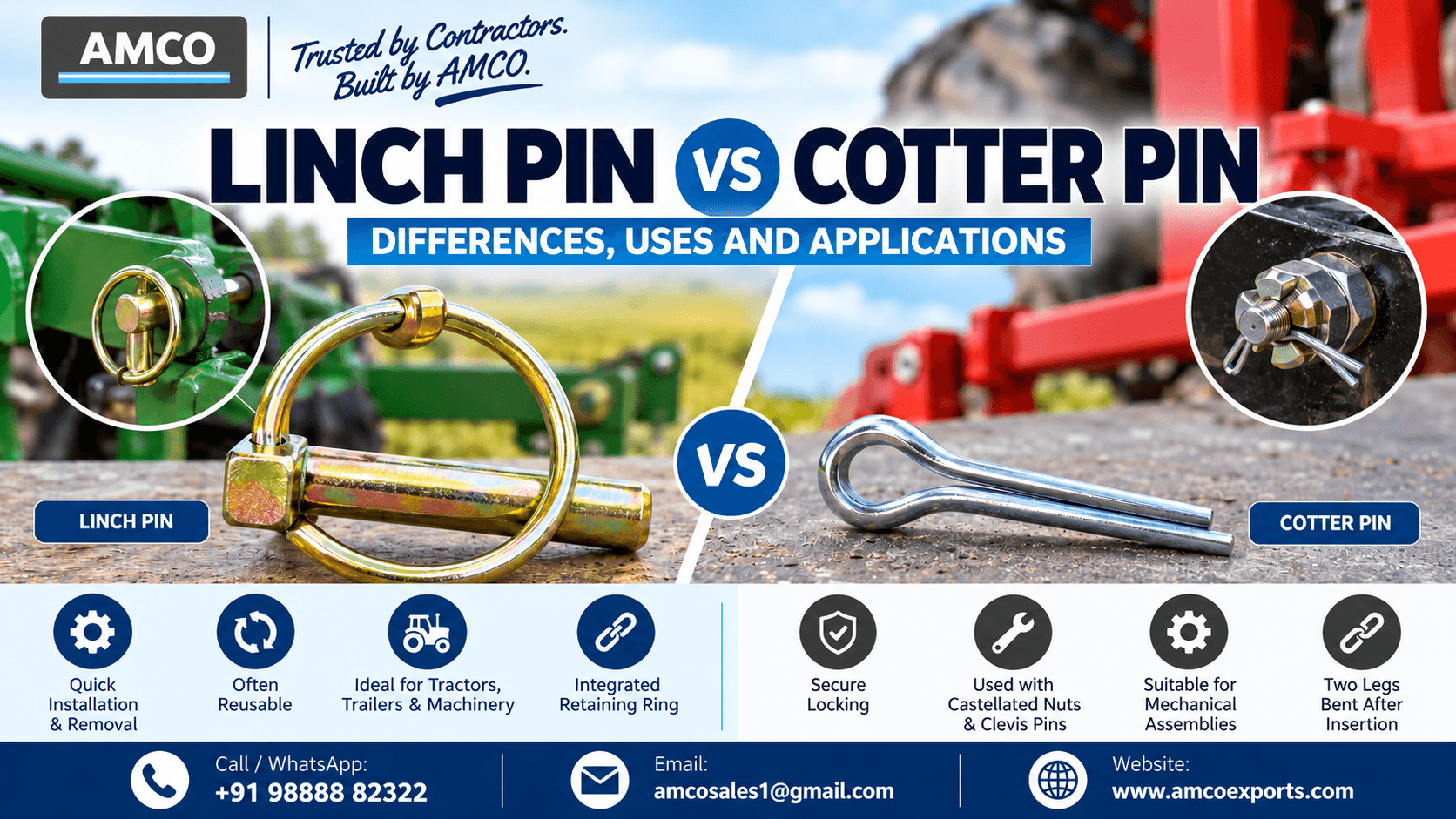
Understanding the differences between a linch pin and a cotter pin helps equipment manufacturers, maintenance teams, dealers and procurement professionals choose the right fastener for their needs.
View Linch Pins from AMCO Exports →
What Is a Linch Pin and How Does It Work?
A linch pin, also spelled lynch pin or lynchpin, is a retaining fastener that allows quick installation and removal. It typically features a straight pin and an integrated retaining ring or keeper. After you insert the pin into a compatible assembly, the keeper helps prevent it from slipping out.
This design suits equipment that requires frequent connection and disconnection. Unlike a conventional split pin, a linch pin generally does not require you to bend metal legs during installation.

Common Applications of Linch Pins
Many industries use linch pins when equipment needs a removable retaining device. Common applications include:
- Tractor attachments and agricultural implements
- Trailer and hitch assemblies
- Machinery shafts and retaining points
- Industrial equipment with removable connections
- Selected construction and equipment assemblies
Key Features of Linch Pins
- Quick installation and removal
- Integrated retaining ring or keeper
- Convenient operation during repeated assembly and disassembly
- Different sizes and configurations for compatible applications
- Practical retention for suitable equipment connections
Before you select a linch pin, check its diameter, usable length, retaining-ring design, material and finish. Also, confirm that the pin matches your equipment specifications.
Explore AMCO Exports Linch Pins
Linch Pin vs Cotter Pin: Understanding Cotter Pins
A conventional cotter pin, also called a split pin in many markets, is a metal fastener with two legs. You insert it through a suitable hole in a pin, shaft or compatible component. Then, you bend the legs according to the assembly requirements to help prevent the fastener from coming out.
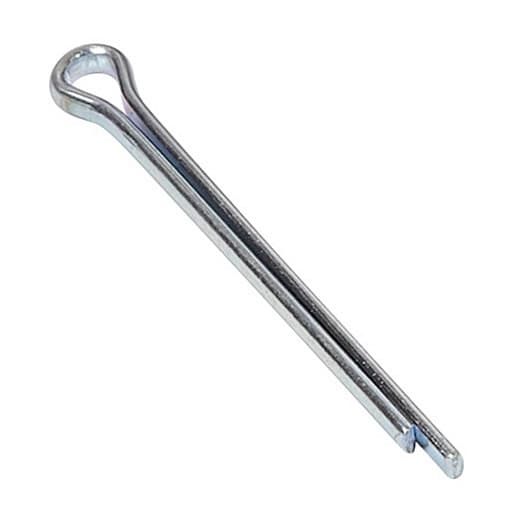
Cotter pins serve as secondary retaining devices in many mechanical assemblies. For example, you can use a cotter pin to secure a compatible castellated nut or retain a clevis-pin assembly, depending on the design.
Common Applications of Cotter Pins
- Securing compatible castellated nuts
- Retaining clevis-pin assemblies
- Mechanical linkages
- Agricultural and automotive assemblies
- General mechanical fastening applications
Choose a cotter pin with the correct diameter and length for the hole and assembly. Follow the equipment manufacturer’s instructions when installing or replacing the fastener.
Linch Pin vs Cotter Pin: Key Differences and Features
The main difference between a linch pin and a cotter pin lies in the locking mechanism. A linch pin generally uses an integrated retaining ring or keeper. A conventional cotter pin uses two legs that you bend after insertion.
| Feature | Linch Pin | Cotter Pin |
|---|---|---|
| Locking mechanism | Integrated retaining ring or keeper | Two legs that you bend after insertion |
| Installation | Insert the pin and engage its retaining mechanism | Insert the pin through a hole and bend its legs |
| Removal | Release the keeper and withdraw the pin | Remove the pin according to the specified procedure; replace it when required |
| Repeated use | Often reusable if undamaged and approved for reuse | Typically replaced after removal or deformation |
| Typical purpose | Quick retention of shafts and equipment components | Retaining components through a drilled hole |
| Common applications | Tractors, implements, trailers and machinery | Clevis assemblies, castellated nuts and mechanical linkages |
Important: Do not automatically substitute one fastener for the other. Check the assembly design, loading conditions, dimensions and equipment manufacturer’s specifications before making your selection.
How to Choose the Right Linch Pin or Cotter Pin
1. Identify the Application
First, determine what the fastener needs to retain. You may need to secure a shaft, retain a nut or hold a removable equipment connection in place. Match the locking method to the assembly requirements.
2. Check Pin Dimensions
Measure the hole diameter, pin diameter, usable length and available clearance. A pin with the wrong dimensions may not retain the assembly correctly.
3. Consider Installation Frequency
Choose a suitable quick-release design for assemblies that require frequent connection and disconnection. For a conventional split-pin arrangement, follow the specified installation and replacement procedure.
4. Confirm Material and Finish
Consider corrosion exposure, the operating environment and the equipment specification. Select a material and surface finish that suit the application.
5. Follow the Manufacturer’s Requirements
For safety-critical or load-bearing equipment, use the specified retaining device. Never choose a pin based on appearance alone or assume that similar-sized fasteners offer equivalent performance.
Common Linch Pin Selection Mistakes to Avoid
Avoid these common mistakes when sourcing or installing retaining pins:
- Choosing a pin without checking the hole diameter
- Ignoring usable length and clearance requirements
- Confusing a linch pin with an R-clip or conventional cotter pin
- Reusing a deformed or damaged retaining fastener
- Assuming that all retaining pins have the same load capacity
- Replacing the specified fastener without confirming compatibility
Linch Pin FAQs: Common Questions Answered
Are Linch Pins and Cotter Pins the Same?
No. A linch pin generally uses an integrated ring or keeper. A conventional cotter pin uses two legs that you bend after insertion.
Is a Cotter Pin Also Called a Split Pin?
Yes. Many markets use the terms cotter pin and split pin for the conventional two-legged fastener. However, terminology can vary by region and industry.
Can a Linch Pin Be Reused?
Many linch pins support repeated installation and removal. Reuse a pin only when it and its locking mechanism remain undamaged and the equipment manufacturer’s instructions permit reuse.
Where Do Linch Pins Commonly Serve?
Linch pins commonly serve tractor attachments, agricultural implements, trailers, shafts and selected industrial equipment assemblies that require quick retention.
How Do I Select the Correct Pin Size?
Check the required diameter, usable length, hole dimensions, clearance and locking mechanism. For equipment assemblies, follow the manufacturer’s specified part number and dimensions.
Explore the AMCO Exports Industrial Pins Guide
Understanding retaining fasteners helps you source suitable pins for machinery, agricultural equipment and industrial applications. For a broader overview of pin types and selection considerations, read our Industrial Pins Guide.
If you need linch pins for your application, visit the AMCO Exports Linch Pin product page to review the available product information.
Looking for Linch Pins for Your Business?
AMCO Exports supplies linch pins for agricultural, industrial and equipment applications. Share your required dimensions, finish, quantity and application with our team to discuss your requirements.
AMCO Exports — Trusted by Contractors. Built by AMCO.
Call / WhatsApp:
+91 98888 82322
Email:
amcosales1@gmail.com
Website:
www.amcoexports.com